

.jpg)
.png)
Frozen food manufacturers operate in a highly specialized environment that requires precise temperature control, strict logistics coordination, and detailed product information. These companies often sell to foodservice distributors, restaurants, retailers, and bulk buyers who expect accurate specifications, cooking guidelines, allergen details, and reliable supply chain visibility.
Shopify and Shopify Plus provide a flexible digital commerce framework that supports both B2B ordering workflows and D2C product discovery, while maintaining a professional presentation of technical data that frozen food buyers need.
Frozen food producers may offer items such as fries, dough, breads, rolls, parbaked goods, prepared meals, frozen snacks, empanadas, or filled products. These are purchased by:
Most manufacturers do not show pricing publicly. Instead, they use request a quote, contact sales, or distributor locator workflows. Their product pages highlight benefits, certifications, formats, and preparation methods, which support both procurement teams and chefs during product evaluation.
Manufacturers often create well designed landing pages that introduce a category, such as Fries, Parbaked Breads, or Filled Appetizers. These pages include:
Product pages highlight features and technical information without necessarily functioning as retail consumer pages. Instead of pricing, buyers typically see:
These pages prioritize accuracy and ease of evaluation.
Many frozen food manufacturers, such as Lamb Weston, offer downloadable spec sheets. Shopify supports PDF hosting using product metafields or file uploads.
Spec sheets often include:
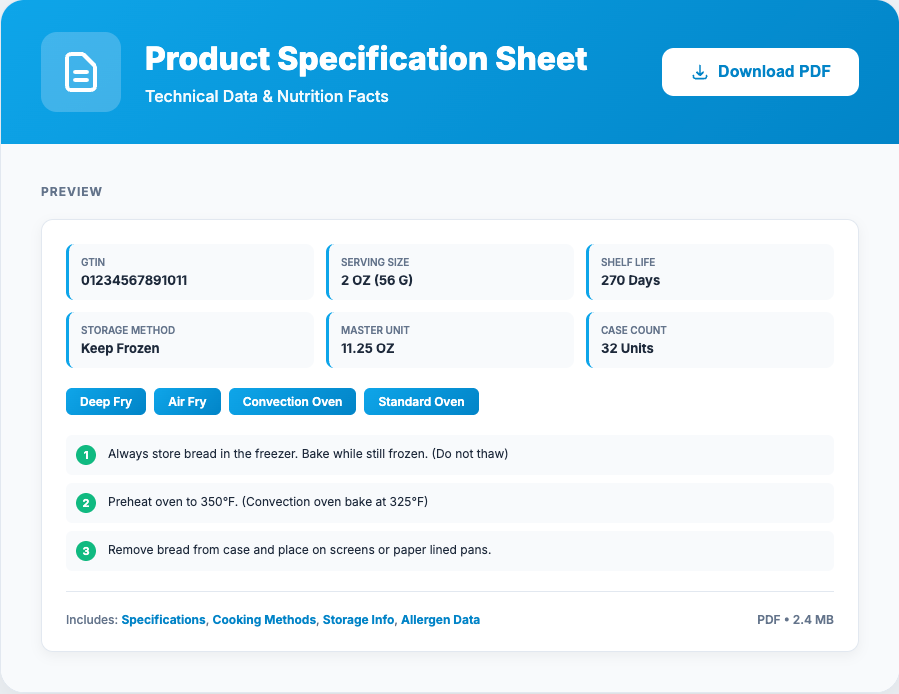
Below is an integrated example inspired by industry standards and your provided references.
Cooking methods are essential for frozen food buyers, especially chefs and restaurant operators. Typical instructions include:
Example handling instructions that appear in many product pages:
Manufacturers that sell wholesale often rely on Shopify Plus B2B features, which allow:'
Frozen food companies can hide all pricing and add to cart functionality until the customer logs in, ensuring only approved buyers can place orders.
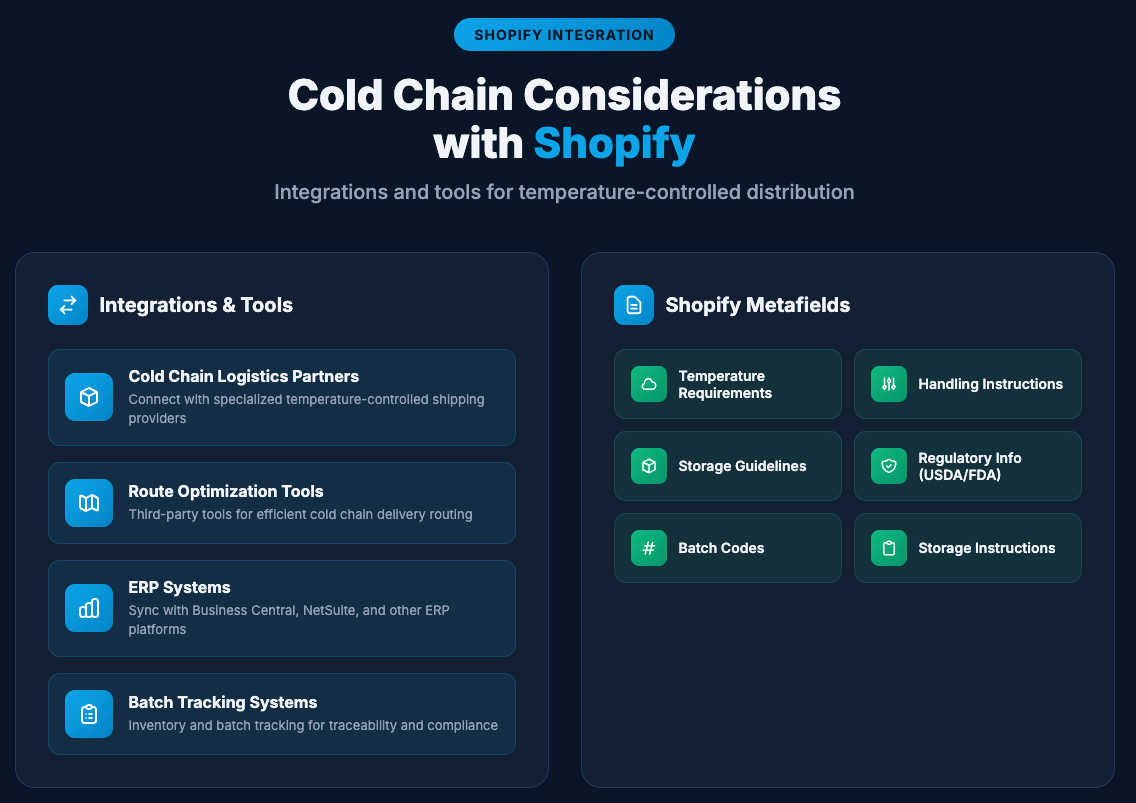
Although Shopify does not manage temperature control, it integrates with tools that support cold chain operations and order fulfillment, such as:
Manufacturers can also use Shopify metafields to store:
Shopify is effective for frozen food operations because it allows teams to:
Manufacturers retain control over who sees pricing, while still presenting a polished and information rich catalog for product discovery.
Frozen food manufacturers use Shopify and Shopify Plus to combine strong product storytelling with professional technical documentation. Buyers can explore product lines, review cooking instructions, download specification sheets, and place wholesale orders through secure B2B channels.
With integrations to ERP, cold chain logistics, and distributor networks, Shopify becomes a flexible digital foundation that supports both marketing and procurement. Manufacturers can showcase their product quality and ensure buyers receive the detailed information they need to make confident purchasing decisions.

.png)
